

Arts Insider – Jack Philp, DU Dance
21st April, 2026
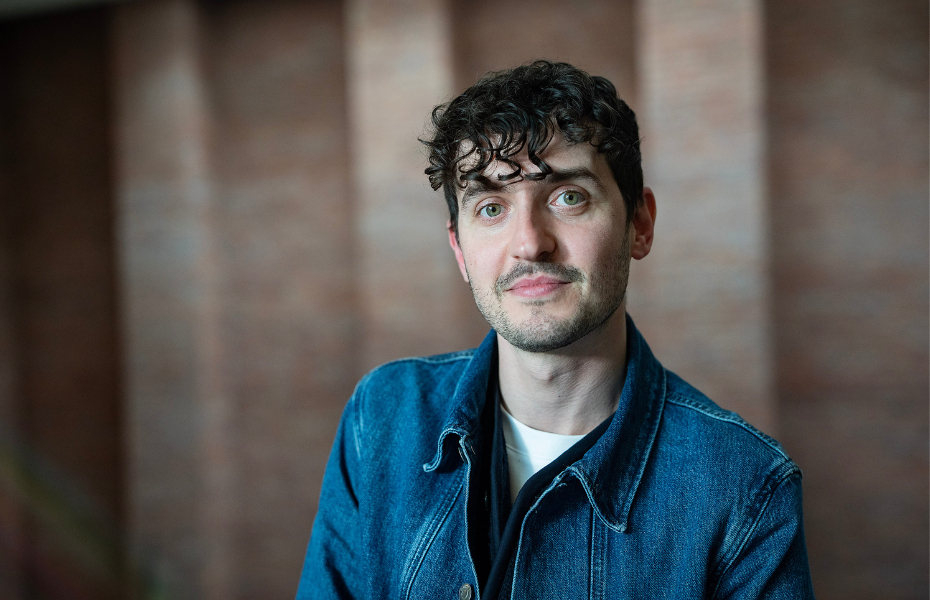
Despite the challenges the arts sector faces, there’s a lot of energy, a lot of innovation, and a real desire to connect. I think dance has a vital role to play in that, both in reflecting the world we’re in, and in helping us imagine what comes next.
Jack Philp has taken up his appointment as Artistic Director for DU Dance, Northern Ireland’s only dedicated dance development Company. A seasoned choreographer, bringing years of experience from National Dance Company Wales, Dance Ireland’s HATCH programme, Dance Cork Firkin Crane, Galway Dance and more, he now sits at the helm of the organisation’s artistic vision.
We caught up with him to find out more about what inspires him and what excites for the future.
What inspired you to get into dance?
My entry point into dance was through youth dance, and that experience really shaped everything that followed. I was fortunate to go to a secondary school with a strong performing arts focus, where dance wasn’t treated as an extra but as something central. That environment made it feel accessible, like something I could genuinely be part of.
Beyond that, my interest in dance and the wider performing arts was supported through college and into my professional training at Trinity Laban Conservatoire of Music and Dance. Being in London at that time was a real turning point. I was immersed in a city where I could experience everything from small-scale performances to large productions, alongside exhibitions and work across different art forms.
I think it was during that period that something shifted for me. I realised I didn’t just want to be part of the work, I wanted to make it, and eventually, to lead.
How, if so, you feel, would you say it intersects with other art forms?
Choreographically my work is dance-focused, but I’m constantly drawing from visual art, fashion, music, digital and design as ways of expanding how an audience experiences it.
I’ve been fortunate to collaborate with a wide range of artists across different fields; composers working from electronic soundscapes through to contemporary classical, digital artists and coders, scientists and researchers, as well as lighting and fashion designers, including those from places like London College of Fashion. What excites me is seeing all those perspectives meet in one place. When it clicks, it gives a real energy and charge to the work.
How would you say dance has evolved and changed since you began in your career?
One of the biggest shifts I’ve noticed is how brilliantly porous the boundaries of dance have become, and that wider acceptance of how dance can exist across different spaces, formats and contexts. It’s just as likely to be encountered in a gallery, online, in public space or embedded within communities as it is on a theatre stage. That’s opened up new possibilities, both artistically and in terms of access.
Alongside that, the ecology around dance has shifted. You’re seeing more artists and companies working in project-based ways, building work across different platforms, and dancers moving fluidly between theatre, commercial shoots, film, tv and digital spaces. That blend feels exciting, it reflects a sector that’s adapting, expanding and finding new ways to sustain itself and remain relevant.
Training spaces are evolving too, responding to that same shift. There’s a growing recognition that how dancers think, collaborate and understand their own voice within the work is vital. You can feel a broader range of perspectives too, in who is making work and, in the stories, and ideas being explored, which gives the landscape a different kind of depth.
What’s interesting is that all of this sits alongside the continued importance of larger-scale companies and organisations too, who play a vital role in holding space for ambitious, high-quality work and providing other forms of structure within the sector.
Looking ahead, the challenge, and the opportunity, is how we continue to honour the body at the centre of it all while allowing the form to move with the world around it.
What do you predict for the future – trends? What are you excited for, in terms of DU Dance and the wider dance and arts sectors, locally and globally?
I think we’ll continue to see dance expand in how and where it exists. Technology will play a role in that, but I don’t think it replaces anything, it just gives us new tools. What interests me is how we use those tools in a way that keeps the human experience at the centre.
There’s also a growing recognition of the importance of local ecosystems. The strength of a dance sector isn’t just in its flagship companies, but in how it connects to communities, to young people, to independent artists. That joined-up thinking feels increasingly important and reflects my ambitions for us at this time.
At DU Dance (NI) I’m excited to develop that work further. There’s already a strong foundation, and the potential to build deeper pathways into dance; supporting people at different stages, from first engagement through to training and wider opportunities across the sector. More broadly, I’m optimistic. Despite the challenges the arts sector faces, there’s a lot of energy, a lot of innovation, and a real desire to connect. I think dance has a vital role to play in that, both in reflecting the world we’re in, and in helping us imagine what comes next.
Final thoughts
Now, a lot of the focus is on the upcoming DU Dance (NI) programme, including our Primary School Dance Festivals in Belfast (20th & 21st May) and Derry (4th June). These events are a key part of our work, creating space for young people to perform and be part of something collective.
Alongside that, there are new projects and collaborations in development which will be shared over the coming months.
More than anything, stepping into this role feels like an opportunity to build something meaningful over time, working with artists, communities and partners to strengthen the presence of dance across Northern Ireland and our place within it.
The Arts Council of Northern Ireland is proud to be principal funder of DU Dance.
Find out more here - www.dudanceni.com